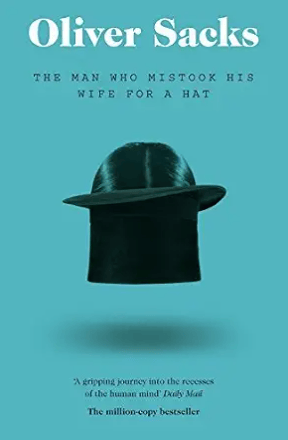
The Man Who Mistook His Wife for a Hat is a book published in 1985 by neurologist Oliver Sacks. The book entails Sacks’ experiences and encounters with his patients that he was able to diagnose and reflect on their unique circumstances.
The book is divided into total four categories: Losses, Excesses, Transports, and The World of the Simple. Each categories describes an interaction that the neurologist had with different patients that represent different disorders and conditions that fit each, such as Tourette’s Syndrome and agnosia. Not only that, it guides us through the process of his diagnosis and investigation, citing neuroscience information that is needed to understand some of the conditions. The author also entails in giving visualization to help readers to understand better.
The cases overall presents that brain goes beyond just being responsible for receiving senses from our bodies. It also demonstrates the lifestyle that the patients live with a neurological disorder, showing the impact that it has on relationships and sense of identity. The complexity of the human brain suggests a deeper understanding of each of the conditions and to look at patients as individuals rather than people with conditions.
Recommendation: readers who want to read about diagnostic cases of neurological disorder.


답글 남기기