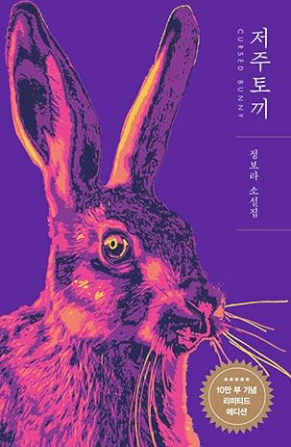
Cursed Bunny is a collection of science fiction and thriller/horror short story collection by a Korean author, Bora Chung, published in 2017. It has ten short stories, all centered around the theme of human desires in oppressive modern society. It has been translated into many languages and was shortlisted for International Booker Prize in 2022.
The Head: The growing head represents the pressures and the responsibilities that cannot be easily dismissed. Its repeated return throughout the protagonist’s life represents the way guilt and unresolved emotions continue through time. The story also critiques the societal expectations of motherhood and caregiving especially for women.
The Embodiment: The unexpected pregnancy highlights the lack of control that women often have over their own bodies. Society’s obsession to determine a father exceeds the woman’s experience and truth, revealing profound sexism. Surrealism is used to demonstrate how institutions may exclude and shame women who do not conform to social norms.
Cursed Bunny: The cursed lamp is a symbol of revenge passed on through generations, and the persistent consequences of greed and cruelty. The businessman’s abuse of others is like capitalist systems that value profit over people. Even in death the cycle of suffering continues, implying that corruption infects both victim and the offender.
The Frozen Finger: The moving finger is a symbol of the protagonist’s inability to let go of grief and accept death. The attachment to the finger grows increasingly obsessive, demonstrating how emotionally consuming mourning can be. The story depicts loneliness as a distorting reality, imprisoning people in the past.
Snare: The gold-making beast is a symbol for the destructive power of greed, the human tendency to take advantage of living things for the sake of wealth. And the family gives up more to get rich, and slowly they lose their morality and humanity. The story is a critique of capitalism and how desperation and profit can corrupt ordinary people.
Goodbye, My Love: The robotic partner demonstrates how technology can simulate emotional intimacy while still falling short of a full replacement for human connection. The main character’s loneliness makes her vulnerable to artificial love, emphasizing emotional isolation in the present day. The story asks whether love is being truly human or just being understood.
Scars: The cave and the monster represent trauma, confinement, and lost innocence. The character adjusts to cope, illustrating the ways in which abuse can change someone’s sense of self and what is considered normal. The narrative indicates that scars of trauma persist even after escaping the literal danger.
Home Sweet Home: The haunted apartment reveals the concerns about the problems of housing, indebtedness, and making a life for oneself through financial prosperity. The hope for having one’s own home transforms into a horror of suffering. The tale is a critique of contemporary society’s preoccupation with economic success.
Ruler of the Winds and Sands: With the desert setting, the weakness of human existence in the face of greater powers is highlighted in this story. It analyzes how survival and fear of the unknown can force individuals to commit acts of violence and cruelty.
Reunion: The reconnection between past relationships serves as an illustration of how some people remain haunted by the emotions of their past. The theme of loneliness is widely presented in the narrative, and so is the yearning for what has been lost.
Cursed Bunny by Bora Chung, a Korean author, is a collection of short sci-fi and horror stories. She included supernatural elements to the story to create more enchanting and mysterious plot. Across the ten stories, the theme of human desires shown in different forms were integrated into each of the short stories. The author explores how greed, loneliness, trauma, and social oppression can change human behavior and turn desires into horror. She also critiques systems like capitalism while showing how fear and grief create repetition of suffering that transform both individuals and society.


답글 남기기