Introduction:
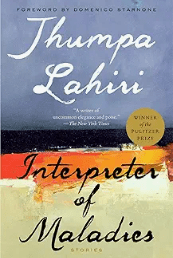
Interpreter of Maladies is a collection of short stories by Jhumpa Lahiri, published in 1999. It follows a cohesive nine stories about Indian-Americans with connecting themes of isolation, miscommunication, and the search for belonging. This book was awarded the Pulitzer Prize in 2000 for its outstanding portrayal of Indian-American society and the interconnection between the short stories.
Plot:
A Temporary Matter
Shoba and Shukumar reconnect through nightly confessions during power outages after the loss of their baby. The honesty presented their past emotional distance when Shoba decides to leave.
When Mr. Pirzada Came to Dine
Lilia’s family becomes friends with Mr. Pirzada, a scholar separated from his family during political unrest in South Asia. Through him, Mr. Pirzada teaches Lilia about fear, kindness, and global conflict.
Interpreter of Maladies
Mr. Kapasi guides the Das family through India and becomes emotionally drawn to Mrs. Das. Her confession of an affair exposes deep misunderstandings and emotional emptiness toward both the Das family and Mr. Kapasi.
A Real Durwan
Boori Ma is an elderly caretaker tolerated by residents in a Calcutta apartment building. When problems arise, she is unfairly blamed and expelled from the community.
Sexy
Miranda begins an affair with a married man, believing it makes her feel valued. She ends the relationship with the man after realizing the emotional harm it causes.
Mrs. Sen’s
Mrs. Sen struggles to adapt to life in America while babysitting a young boy. After a driving accident, she becomes more isolated in American society.
This Blessed House
Twinkle delights in the Christian objects found in her new home, while her husband Sanjeev is deeply uncomfortable. Their contradictory reactions show deeper conflicts in values and identity.
The Treatment of Bibi Haldar
Bibi Haldar suffers from an unexplained illness that was followed by social ignorance and avoidance. After giving birth, however, she recovers, suggesting healing through community and purpose.
Analysis:
This book is connected through shared themes of isolation, miscommunication, and the search for belonging. Many characters live between cultures or emotional states, feeling disconnected even within families, marriages, and communities. Some stories present intimacy as fragile, with characters confusing confession or desire for true understanding. These relationships reveal that communication without empathy often deepens emotional distance rather than heals it. Immigration is explored as an emotional struggle in other stories where routines, food, and memory become anchors in unfamiliar environments. Mrs. Sen’s fear of driving symbolizes her inability to move forward in her new life, while Mr. Pirzada’s dinners reflect his longing for family and stability. Contrastingly, The Third and Final Continent presents adaptation as slow but possible, offering hope through patience and mutual effort. Also, some highlight how communities set standards for vulnerable individuals. Boori Ma is discarded when she no longer serves the residents, while Bibi is only accepted after her transformation into a mother. “This Blessed House” further emphasizes imbalance within relationships, using cultural symbols to reveal deeper emotional divides. Together, the stories suggest that true connection requires compassion, and loneliness often exists quietly beneath everyday life.
Conclusion:
Interpreter of Maladies is a collection of nine short stories by Jhumpa Lahiri, published in 1999. It follows different Indian-Americans leading a new life in America, with connecting themes of loneliness, miscommunication, and the search for belonging. The book shows these themes through different characters and different subthemes that align some stories to another.
 Alicia kim's blog
댓글 남기기