Introduction:
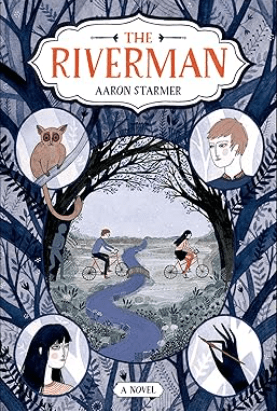
The Riverman is a mystery novel by Aaron Starmer, published in 2014. The story follows Alistair Cleary, a quiet boy selected to write the biography of Fiona Loomis, his odd neighbor who says to travel to a magical realm known as Aquavania. Alistair starts to wonder if Fiona’s stories are made up or about something much more dark as she relates her story about the Riverman, a creature that steals souls. The book, which is full of mystery and excitement, examines themes of truth, imagination, and the evil that can hide beneath childhood’s surface.
Analysis:
The Riverman by Aaron Starmer examines the fuzzy boundaries separating reality from fantasy. The protagonist of the tale is Alistair Cleary, a quiet and observant boy who gets caught up in his neighbor Fiona Loomis’s bizarre world. Alistair isn’t sure if he should believe Fiona when she tells him that she visits a magical place called Aquavania, where people can make their own worlds. As Fiona explains the evil character known as the Riverman—who steals the souls of dreamers—Alistair starts to sense a deeper, darker reality, even though at first her stories appear to be the wild imagination of a creative child. Starmer creates tension between reality and fantasy throughout the book, making readers wonder what is real. The Riverman himself turns into a representation of loss, terror, and the perils of running away. Fiona’s journeys to Aquavania symbolize her struggle to maintain her identity as well as her wish to escape the suffering of the real world. Alistair’s increasing fixation on Fiona’s tale exposes his desire for understanding and connection, but it also draws him into a mystery that defies logic. The novel’s eerie yet poetic tone captures the delicate balance between a child’s innocence and the darkness of growing up. Starmer examines how imagination can be both a haven and a trap using the story-within-a-story format. Because it never reveals whether Aquavania is real, the novel’s ambiguity keeps readers guessing and emphasizes the theme of belief versus truth. It also looks at how people deal with loneliness and trauma, and how storytelling can end up being a survival strategy. By the end, Alistair’s journey is more about facing the boundaries of empathy and less about solving Fiona’s mystery.
Conclusion:
In conclusion, Aaron Starmer’s The Riverman is a moving and mysterious story that examines the strength and peril of imagination. The relationship between Alistair and Fiona illustrates in the book how storytelling can both conceal and heal suffering. Readers are kept wondering what is real by the unclear boundary between fantasy and reality, which reflects the uncertainty of maturing and dealing with challenging emotions. As a terrifying representation of loss and terror, the Riverman himself serves as a reminder to readers that running away from reality can have consequences. In the end, Starmer’s book haunts us with the thought that while imagination can save us, it can also destroy us if we lose touch with reality.
 Alicia kim's blog
댓글 남기기