Introduction:
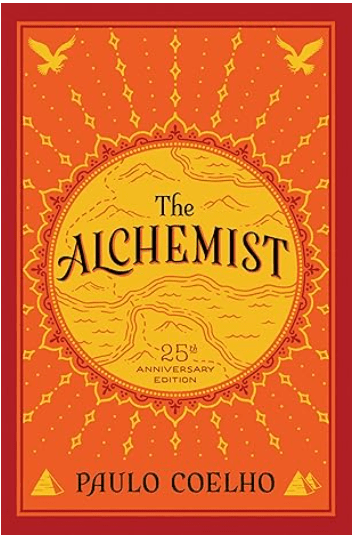
The Alchemist is a philosophical novel that follows the journey of Santiago, a young shepherd from Spain, who dreams of discovering treasure near the Egyptian pyramids. Along his journey, he encounters guides, omens, and challenges that teach him about destiny, perseverance, and the importance of following one’s heart. The novel blends elements of fable, allegory, and spiritual wisdom, creating a timeless story about self-discovery. At its core, The Alchemist explores the idea that true treasure lies not in material wealth but in realizing one’s Personal Legend.
Analysis:
The author highlights the significance of pursuing one’s Personal Legend, which is the distinct purpose or destiny that each person must achieve, demonstrating that pursuing one’s dreams is the path to true happiness. As he learns to follow his heart and spot omens that point him in the direction of his destiny, Santiago’s journey represents the universal search for meaning. His interactions with characters such as Melchizedek, the alchemist, the Englishman, and the crystal merchant all symbolize various perspectives on dreams, including those of fear, complacency, curiosity, and mastery. For example, the alchemist exemplifies the bravery required to welcome change, while the crystal merchant represents the peril of allowing fear to stop one from pursuing their goals. Because Santiago develops spiritually with every obstacle he encounters, Coelho also emphasizes the idea that the journey itself is just as valuable as the destination. By illustrating the interdependence of all creation, the idea of the “Language of the World” teaches Santiago that intuition and love can lead him just as confidently as reason. His relationship with Fatima serves as an example of how genuine love encourages one to pursue their goals rather than stifling them. The recurrent theme of transformation, particularly the alchemical metaphor, serves as a reminder that risk, change, and personal sacrifice are necessary to realize one’s dreams. By exposing that Santiago’s true treasure is wisdom and self-discovery rather than gold, Coelho also challenges materialism. The harshness and beauty of the desert serve as a metaphor for life’s hardships, reminding readers that overcoming them is a necessary part of the process. Through Santiago’s perseverance, the book makes the argument that the biggest obstacle to greatness is fear. Omens encourage trust in life’s enigmatic guidance by symbolizing faith in the unknown. In the end, the narrative combines spirituality and pragmatism to remind readers that although fate is predetermined, it can only be fulfilled by bravery and action. Because of Coelho’s use of allegory, the book is readable by a broad readership and inspires contemplation about one’s own goals and the actions required to achieve them.
Conclusion:
To sum up, The Alchemist narrates the tale of Santiago, a shepherd who pursues his dream of discovering riches in Egypt, only to realize that the real treasure is found within himself and his quest. He picks up valuable lessons about trusting in the interconnectedness of the universe, listening to his heart, and identifying omens along the way. He learns from his interactions with the king, the Englishman, the Alchemist, and Fatima that faith and personal development are more important than worldly possessions. Coelho highlights that pursuing one’s Personal Legend is a journey to self-discovery and a reminder that the greatest treasures are often found by combining Santiago’s story with themes of destiny, love, and perseverance.
 Alicia kim's blog
댓글 남기기